
Table of Contents
- The Wide Price Range
- Budget Tier: $15–$60 per Panel
- Mid-Range Tier: $60–$130 per Panel
- Premium Tier: $130–$260 per Panel
- Ultra-Premium Tier: $260–$400+ per Panel
- Total Cost for a Feature Wall: A Realistic Estimate
- Factory-Direct vs Retail Pricing
- Reducing Wood Wall Panel Costs Without Reducing Quality
- Wood Wall Panel Cost FAQs
The Wide Price Range
Wood wall panels in 2026 range from $15 per panel to $350+ per panel. That’s a 20x price gap for products that ostensibly do the same thing. Understanding what drives the price at each level — and what you lose by going cheaper — is the most useful thing you can know before starting your research.
Budget Tier: $15–$60 per Panel
What you typically get:
- Printed laminate or paper-thin “veneer” surface (not real wood)
- Paper or non-woven backing — no acoustic performance
- Standard MDF core (no moisture resistance)
- Basic edge finishing — joins may show
- Variable quality control — panels within one order may not match perfectly
Best for: Temporary installations, very large coverage areas where budget overrides quality, utility spaces. Not recommended for living rooms, bedrooms, or any space seen and experienced daily.
Mid-Range Tier: $60–$130 per Panel
What you typically get:
- Real wood veneer (0.3–0.6mm) — genuine grain, some natural variation
- Improved MDF core — more consistent flatness
- Basic felt or fabric backing — some acoustic performance (NRC 0.30–0.55)
- Better edge finishing — joins are tighter
- More consistent quality control within batches
Best for: Bedrooms, children’s rooms, secondary spaces where quality matters but budget is limited. Acceptable in living rooms if budget is the constraint.
Premium Tier: $130–$260 per Panel
What you typically get:
- Real wood veneer (0.6mm+) — genuine grain, natural variation, species-authentic character
- Engineered acoustic felt backing (AcuFelt™ or equivalent) — NRC 0.65–0.85
- MR-MDF or equivalent moisture-resistant core
- Precision-machined edges — invisible joins
- FSC certification — responsible timber sourcing
- Professional installation guides and dedicated support
Best for: Living rooms, home offices, bedrooms, home theatres, and any space where both aesthetics and acoustic performance matter. The correct specification for most permanent domestic installations.
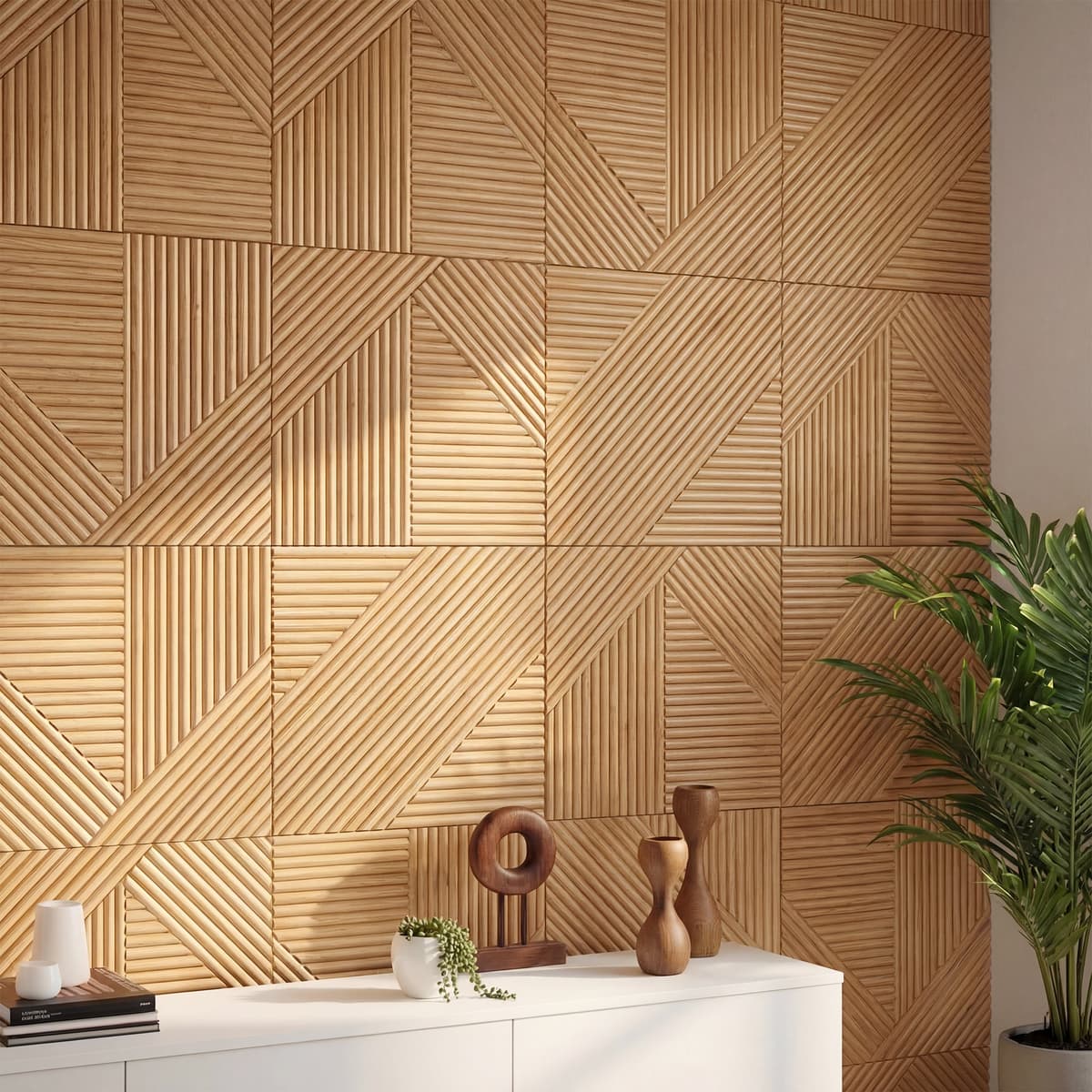
The SoundPanel™ acoustic slat collection and GroovePanel® mosaic range sit in this tier — factory-direct pricing puts premium quality at significantly below traditional retail cost.
Ultra-Premium Tier: $260–$400+ per Panel
What you typically get:
- Thick real wood veneer (1–2mm) or solid wood construction
- Premium species (figured walnut, quarter-sawn oak, exotic hardwoods)
- Bespoke sizing and custom finishes
- Often commercially specified or architect-grade products
Best for: High-end residential renovation, commercial hospitality (hotels, restaurants), heritage projects, and bespoke architectural applications.
Total Cost for a Feature Wall: A Realistic Estimate
| Wall Size (4m × 2.4m) | Budget | Mid-Range | Premium |
|---|---|---|---|
| Panels (approx. 7 panels) | $175–$420 | $420–$910 | $910–$1,820 |
| Adhesive + trim | $40–$60 | $50–$80 | $60–$100 |
| Total DIY | $215–$480 | $470–$990 | $970–$1,920 |
Factory-Direct vs Retail Pricing
Traditional retail adds 40–75% to the factory cost. Factory-direct brands like The Panel Hub eliminate this markup — meaning premium-tier quality is available at prices that often compete with mid-range retail products.
Browse the full wood wall panel collection with transparent pricing, and visit The Panel Hub to see how factory-direct pricing compares to traditional retail for equivalent quality.
Reducing Wood Wall Panel Costs Without Reducing Quality
The gap between the most and least expensive wood wall panel options in 2026 is significant — but so is the gap between what drives the cost and what drives the quality of the visual result. Understanding where cost reduction is safe versus where it compromises the outcome allows you to make smart decisions at every budget level.
Where cutting cost is safe: panel substrate material (engineered core vs solid timber), panel width (narrower boards use less material per square metre), finishing level (pre-primed rather than pre-finished reduces cost and allows you to control the final colour), and DIY installation rather than professional fitting.
Where cost reduction compromises quality: wood face authenticity (real veneer or solid timber vs printed laminate), panel dimensional stability (particularly important in humid environments), and installation precision. A cheap panel installed perfectly will look better than an expensive panel installed poorly.
The most consistent way to reduce overall project cost without compromising the result is to reduce the area covered rather than the quality of material. A smaller panel installation in premium material will look significantly better than a large installation in budget material, and it will remain visually better for longer. Plan the feature wall rather than the whole room if budget is a constraint — and then extend the installation when budget allows.
Wood Wall Panel Cost FAQs
Why do some wood wall panels cost so much more than others at the same size?
The main cost drivers are the wood face authenticity (real veneer vs printed laminate), the species of wood used (walnut and oak cost more than pine or MDF), the precision of the panel machining (consistent dimensions allow faster installation with fewer adjustments), and the country of manufacture. Panels manufactured to European quality standards with genuine wood faces are more expensive than budget alternatives from lower-cost manufacturing countries, and the difference is visible in both the immediate result and how the panels hold up over years of use.
Is it worth buying sample panels before ordering in bulk?
Yes — this is one of the most cost-effective steps you can take in a panel project. Samples allow you to assess the species colour accurately in your specific lighting conditions, confirm that the grain character is what you expected, check the dimensional accuracy against your planned installation, and test the finish before committing. The cost of a sample is negligible compared to the cost of returning an order of unsuitable panels.
What additional costs should I budget for beyond the panels themselves?
Panel adhesive and fixing hardware typically add 5–10% to the panel cost. Battening and substrate preparation (if required) can add £100–£300 for a feature wall. Trim and moulding at panel edges typically adds £50–£150. Finishing materials (oil, paint, filler, caulk) add £40–£100. Installation labour, if using a professional, adds £200–£500 for a single feature wall. Allow a 15% contingency on the total material cost for cuts, waste, and unforeseen preparation requirements.
Are factory-direct panel suppliers actually cheaper than retailer prices?
Factory-direct pricing is typically 20–35% lower than retail pricing for equivalent quality panels, with the trade-off being longer lead times (3–8 weeks rather than 1–5 days), minimum order quantities, and less product variety. Factory-direct purchasing makes most sense for large renovation projects where the volume justifies the lead time and you have the confidence to specify without seeing the product in a showroom first. For smaller projects or first-time buyers, the convenience and assurance of a specialist retailer with samples and returns policies often justifies the price premium.