
Table of Contents
Why Outdoor Wall Cladding Matters
The exterior of your home is its first impression — and one of the most cost-effective ways to upgrade curb appeal, protect the structure, and express a design aesthetic is through wall cladding. Outdoor cladding covers external walls, garden structures, fences, and outbuildings in materials that are both decorative and protective against weathering.
Here are 10 outdoor wall cladding ideas worth considering for your next project.
10 Outdoor Wall Cladding Ideas
1. Composite Timber Cladding
Engineered composite boards that look like timber but resist rot, moisture, and UV fading. They require virtually no maintenance — no painting, staining, or treating — and are ideal for high-exposure exterior walls. Available in a range of wood-look finishes from light ash to dark charcoal.
2. Fibre Cement Cladding
Fibre cement is a highly durable, fire-resistant cladding material available in smooth, wood-effect, and textured finishes. It’s commonly used on modern new-builds and extensions for its clean lines, low maintenance, and excellent weather resistance.
3. Stone Effect Panels
Lightweight faux stone cladding panels give the visual weight and character of natural stone without the structural requirements. Products like RockSurface® cladding replicate slate, limestone, and sandstone finishes and are suitable for exterior applications including garden walls, feature facades, and outdoor kitchen surrounds.
4. Natural Timber Weatherboard
Traditional horizontal timber boards — either painted or stained — remain a classic choice for exterior cladding. Western red cedar and larch are popular for their natural oils and weather resistance. Requires regular maintenance (re-staining every 3–5 years) but offers genuine warmth that engineered materials can’t fully replicate.
5. Brick Slips
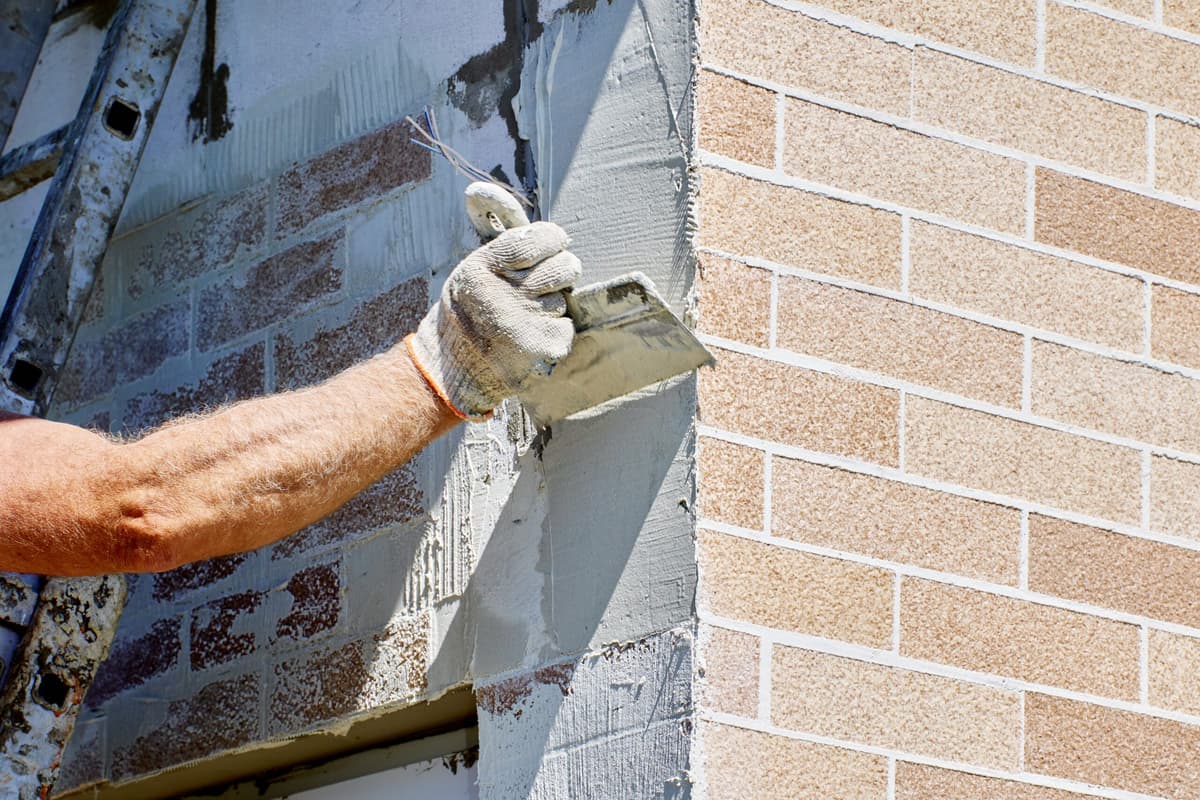
Thin brick slips applied to an existing wall surface give the appearance of a full brick facade without the structural build-up. Popular for renovation projects where the character of brick is desired but full re-facing isn’t viable.
6. Metal Cladding (Zinc, Aluminium, Corten Steel)
Architectural metal cladding suits contemporary and industrial exterior aesthetics. Corten steel develops a distinctive rust patina over time; zinc offers a cool, modern grey; aluminium is lightweight and available in any painted colour. Best suited to architect-designed homes and commercial buildings.
7. Vertical Timber Battens
Vertical timber or composite battens spaced at regular intervals create a sleek, modern cladding profile. They work particularly well on contemporary extensions, garden rooms, and garages. The shadow gaps between battens create depth and movement throughout the day.
8. Render and Painted Masonry
A smooth or textured render finish painted in a bold colour is one of the most cost-effective exterior transformations available. Modern silicone renders are flexible, breathable, and significantly more weather-resistant than traditional sand-and-cement renders.
9. Slate Tile Cladding
Natural slate hung as exterior wall tiles has a long history in British and European architecture. It’s extraordinarily durable, develops character with age, and suits traditional as well as contemporary exteriors when used in large-format tiles.
10. Terracotta or Ceramic Tile Cladding
Large-format terracotta or porcelain tiles used externally create a warm, Mediterranean aesthetic. Modern porcelain outdoor tiles are frost-resistant and highly durable, making them a practical as well as beautiful cladding choice.
Key Considerations for Outdoor Cladding
- Weather exposure: Choose materials rated for your climate — freeze-thaw cycles, high rainfall, and strong UV all affect material performance differently.
- Maintenance requirements: Natural materials (timber, stone) need more upkeep than engineered alternatives (composite, fibre cement).
- Planning permission: In some locations, exterior cladding changes may require planning approval. Check with your local authority before starting work.
- Substrate condition: External cladding applied over a damaged or damp substrate will fail prematurely. Always repair the wall before cladding over it.
Final Thoughts
The best outdoor cladding material balances aesthetics, durability, and maintenance budget. Composite and fibre cement options offer the lowest maintenance overhead; natural stone and timber offer the highest authenticity. Faux stone panels sit in the middle — the visual impact of natural stone with significantly easier installation and less structural demand. Whatever your choice, quality installation and correct surface preparation are what determine long-term performance.
Choosing the Right Cladding for Your Climate
Outdoor wall cladding performs very differently depending on the climate it faces. The same cedar horizontal board that looks stunning and performs well in a mild maritime climate can split, check, and silver unevenly in a continental climate with harsh winter frosts and strong summer sun. Matching cladding material to climate conditions is as important as matching it to the architectural style.
In wet, maritime climates (UK, Northern Europe, Pacific Northwest US), water resistance and breathability are the key specifications. Cedar, larch, and thermally modified timber allow moisture to pass through and dry out without trapping it — which prevents rot from developing behind the cladding. PVC and composite cladding are also suitable here as they are completely waterproof, though they lack the natural character of real timber.
In hot, sunny climates (Southern Europe, Southern US, Australia), UV resistance is the dominant concern. Pale timbers bleach quickly under strong UV exposure; dark finishes absorb more heat and can cause warping. Composite cladding with UV stabilisers, or naturally durable species with high resin content (like teak or ipé), perform better in high-UV conditions. Ensure adequate ventilation behind cladding in hot climates — trapped heat accelerates degradation of both the cladding and the substrate behind it.
In cold climates with freeze-thaw cycles (Northern Canada, Scandinavia, Alpine regions), expansion and contraction between seasons creates stress on any cladding fixing system. Use stainless steel fixings (which resist rust from salt air in addition to freeze-thaw cycling) and specify fixing systems with adequate tolerance for thermal movement. Avoid cladding profiles that trap water at the top edge — any pooled water will freeze, expand, and force the cladding away from the substrate over multiple seasons.
Outdoor Wall Cladding FAQs
How long does exterior timber cladding last?
Lifespan varies significantly by species and maintenance regime. Cedar and larch with regular treatment (every five to seven years) can last 40–60 years. Thermally modified timber (Thermowood, Accoya) typically achieves 30–50 years with minimal maintenance. Untreated softwood cladding (pine, spruce) will require replacement within 10–15 years in exposed conditions. Composite and PVC cladding typically carries manufacturer guarantees of 20–30 years with negligible maintenance.
Can I install outdoor cladding myself?
Straightforward horizontal board cladding on a simple wall is a manageable DIY project for someone with basic carpentry skills. The critical steps are: correct substrate preparation (battens set plumb and level on a ventilated cavity), appropriate fixing choice (stainless steel to avoid rust staining), and correct detail at openings (windows, doors) and junctions. Complex profiles, corner details, and installations around architectural features benefit from professional installation to achieve the weathertight result that external cladding requires.
What colour should outdoor cladding be in a contemporary home?
Contemporary residential cladding in 2026 is dominated by charcoal, deep grey, and dark brown tones — a significant shift from the lighter natural wood tones that dominated 2010–2020. Dark cladding photographes well, reads as premium, and ages more evenly than pale timbers. The trade-off is heat absorption in sunny climates and the need for high-quality, colour-stable finishes that do not fade or chalk within two or three seasons. If dark cladding is used in a warm climate, specify a product with a tested solar reflectance value.
Is cladding better than render for an exterior wall renovation?
Cladding and render serve different purposes and the choice depends on your priorities. Render is monolithic, relatively maintenance-free once in good condition, and provides excellent thermal mass. Cladding offers material character, easier replacement of damaged sections, and in the case of ventilated cladding systems, better management of wall moisture. In a contemporary new-build or renovation, cladding offers stronger design options. In a period property or a building with significant existing render, maintaining or refreshing the render is often more appropriate both architecturally and from a cost perspective.
Shop Exterior Cladding and Interior Panels
For exterior and high-impact feature wall applications, explore the RockSurface® faux stone cladding collection at The Panel Hub — designed for exterior use and feature walls. For interior feature walls that complement your exterior scheme, browse the full wood wall panel collection. Our interior slat wall ideas guide covers indoor treatments across every room, and the acoustic panel buyer’s guide explains interior acoustic options worth considering alongside any exterior project.