
Table of Contents
What Biophilic Design Actually Does
Biophilic design is the practice of incorporating elements of the natural world into built environments — not as decoration, but as a design philosophy rooted in the idea that humans are psychologically and physiologically improved by proximity to nature. Research consistently shows that exposure to natural materials (wood, stone, plant life) reduces cortisol levels, lowers blood pressure, and improves cognitive function and mood.
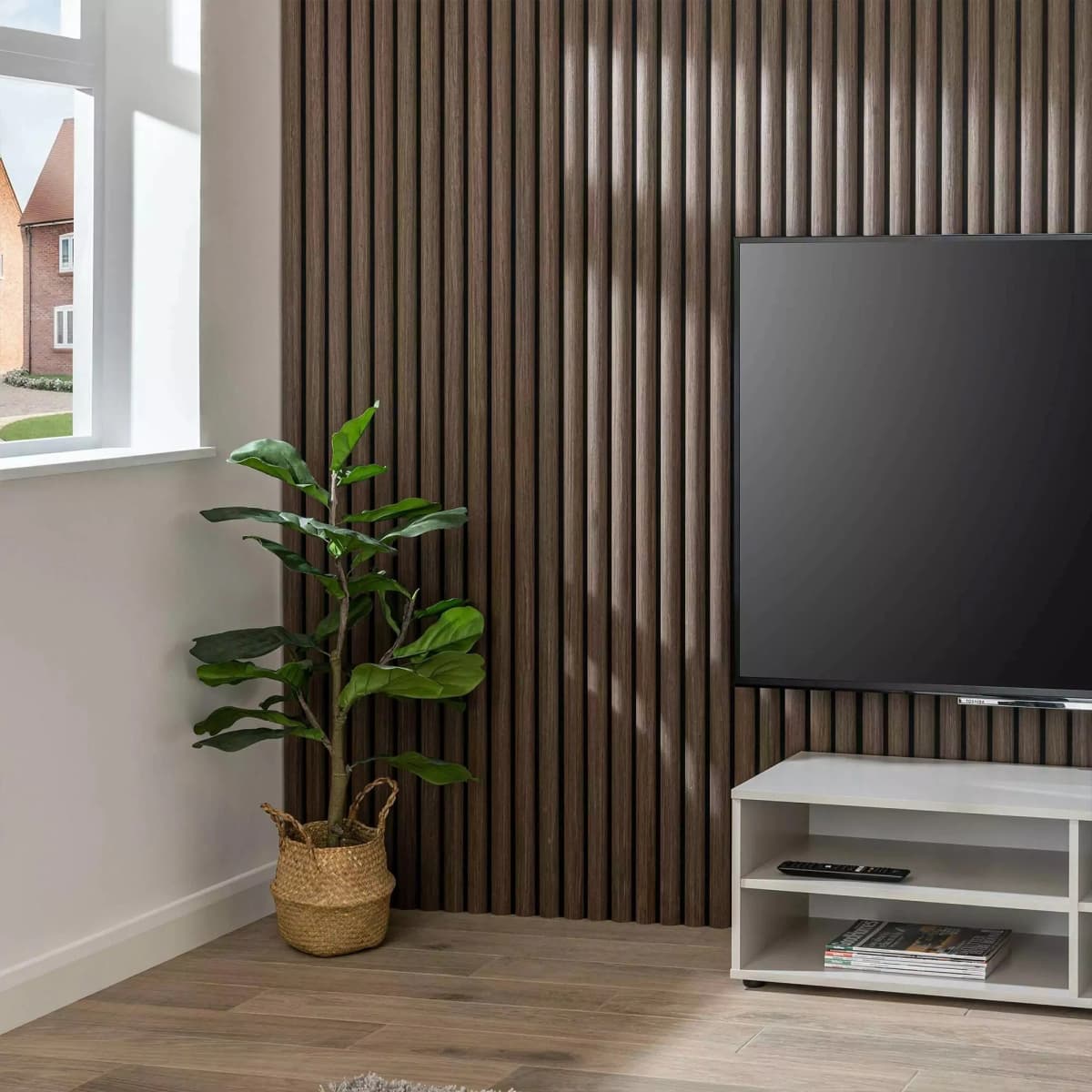
Wood wall panels are one of the most effective biophilic design tools available for residential interiors. Real wood veneer — with its visible grain, natural variation, and organic warmth — activates the same neurological responses as exposure to actual timber in a natural environment. Unlike paint, wallpaper, or synthetic materials, genuine wood reads as organic to the human perceptual system.
Why Real Wood Matters (Not Laminate)
For biophilic design to work, the materials need to be genuine. Laminate wood-effect panels, vinyl wall coverings, and printed wood-look materials do not produce the same psychological response as real wood. The irregularity of grain, the subtle variation in tone, the tactile warmth of wood — these are the specific characteristics that trigger the biophilic response.
This is one context where the premium of real wood veneer over laminate alternatives is genuinely justified by function, not just aesthetics. Our real wood veneer vs laminate wall panel comparison covers this distinction in detail.
The Acoustic Dimension
Biophilic design addresses more than visual stimuli. Sound environment matters: natural environments are characterised by soft, diffuse sound — the absence of sharp echoes and hard reverberation. Acoustic wood slat panels contribute to this directly. By reducing echo and reverberation in a room, they create a sonic environment that is calmer and more restorative — closer to the acoustic profile of a natural space than a typical hard-surfaced interior.
This is perhaps the most underappreciated biophilic benefit of acoustic slat panels: they don’t just look natural, they make rooms sound more natural. Our guide to acoustic wall panel performance explains how absorption works and what NRC ratings mean in practical terms.
Biophilic Panel Design Principles
Maximise Natural Grain Visibility
Choose species and finishes that show grain clearly — natural oil or hardwax finishes rather than thick lacquer that creates a plastic-like film over the wood. Wire-brushed or lightly textured finishes emphasise grain character and add tactile interest.
Allow for Natural Variation
Biophilic interiors embrace natural variation rather than engineering it out. Species with pronounced grain movement, knots (where appropriate), and natural colour variation are preferable to uniformly figured, perfectly consistent panels. Each panel being slightly different is a feature, not a flaw.
Combine with Other Natural Elements
Wood panels work best in biophilic schemes when combined with other natural materials: stone (real or high-quality faux), linen, jute, cotton, living plants, and natural light. Isolating wood panels in an otherwise synthetic interior delivers some benefit but limits the cumulative biophilic effect.
Consider the View
Where possible, position panel walls to be visible from primary seating and resting positions — where you spend the most time. A panel wall visible from a sofa, a bed headboard, or from a home office desk creates ongoing, passive exposure that accumulates over time.
For specific room applications, our wood wall panels for bedroom guide and wood slat panels for living room guide cover the layout principles that maximise both visual and acoustic impact in the spaces where biophilic benefit is most valuable.
Specifying Wood Panels for Maximum Biophilic Impact
Not all wood wall panels deliver the same biophilic benefit. The research on biophilic design consistently points to natural material authenticity as the key variable — a photographic wood-print laminate does not produce the same physiological response as genuine veneer or solid timber, even when they appear visually similar from across a room. The brain processes material authenticity at close range in ways that affect how restful a space actually feels, even if the conscious observer cannot articulate why one panel is different from another.
For maximum biophilic impact, specify panels with real wood faces — either solid timber slats or veneer-faced boards with visible grain movement. The grain should be natural and varied rather than the unnaturally consistent repeat patterns common in lower-grade panels. Species with distinctive grain character — oak, ash, walnut, cedar, pine with its wide annual rings — are particularly effective because the grain variation gives the eye somewhere to move and settle. Highly uniform grain, or printed grain patterns with a visible repeat, does not produce the same calming effect.
Tactile quality matters as well. A panel with a natural oil or hardwax finish retains the genuine surface texture of the wood — micro-ridges, pore depth, the slight variation across the grain. This is the texture your hand and your peripheral vision process as authentically natural. A high-gloss lacquered panel, by contrast, creates a smooth, reflective surface that blocks tactile authenticity entirely. In a space intended for rest or concentration, the natural finish is not just aesthetically preferable — it is functionally better for the biophilic outcome.
Biophilic Wood Panel FAQs
Does the type of wood species matter for biophilic design?
Yes, though perhaps not in the way you might expect. Species with visible grain movement — oak, ash, walnut, cedar — tend to produce stronger biophilic responses than very tight-grained or highly uniform woods. The presence of natural imperfection (knots, grain variation, slight tonal shifts across the board) is a positive signal of authenticity that the brain associates with natural environments rather than manufactured surfaces.
Can biophilic panels work in a commercial office environment?
Research specifically supports the use of biophilic design in workplaces. Studies show measurable improvements in concentration, reported wellbeing, and reductions in stress markers when natural materials — including timber — are present in office environments. Slat panels on a single feature wall, or timber ceiling panels above a work zone, are practical and cost-effective ways to introduce biophilic benefit into commercial interiors without a full refurbishment.
Do plants enhance the effect of wood wall panels in a biophilic scheme?
Yes. The combination of living plants and natural wood materials amplifies the biophilic effect of both elements individually. Plants introduce movement, scent, and genuine living-organism cues that static materials cannot replicate. Trailing plants positioned in front of or adjacent to a wood panel wall create a layered nature reference — material and living organic together — that produces the most complete biophilic interior environment.
Is bamboo a suitable alternative to wood for biophilic panels?
Bamboo is a viable biophilic material with genuine natural credentials — it is technically a grass rather than a timber, but it grows in natural environments and has authentic grain character. Bamboo panels are suitable for biophilic interiors, particularly where sustainability is a priority, as bamboo reaches harvestable maturity in three to five years compared to decades for hardwood species. The aesthetic reads as more tropical or Japandi-influenced than mainstream oak or walnut panels.